
Room Addition Framing Contractor in Sacramento, CA
Structurally engineered addition framing for single-story, second-story, kitchen, rear, and side additions across Sacramento County.
Involves
What Structural Addition Framing Actually Involves
Foundation continuity:
The new addition must connect to a new foundation that ties to or extends the existing foundation — no floating slab on its own
Floor system connection:
The new floor system must tie into the existing floor framing at the same elevation or be properly stepped and transitioned
Wall framing integration:
New exterior walls must connect structurally to the existing wall frame — not just bump against it — with proper bearing, shear transfer, and weather barrier continuity
Roofline integration:
This is the most visible and most technically demanding part of any addition — new rafters, valleys, ridges, and roof sheathing must tie into the existing roof structure without creating water infiltration points or bearing failures
Room Addition Framing Services We Provide in Sacramento
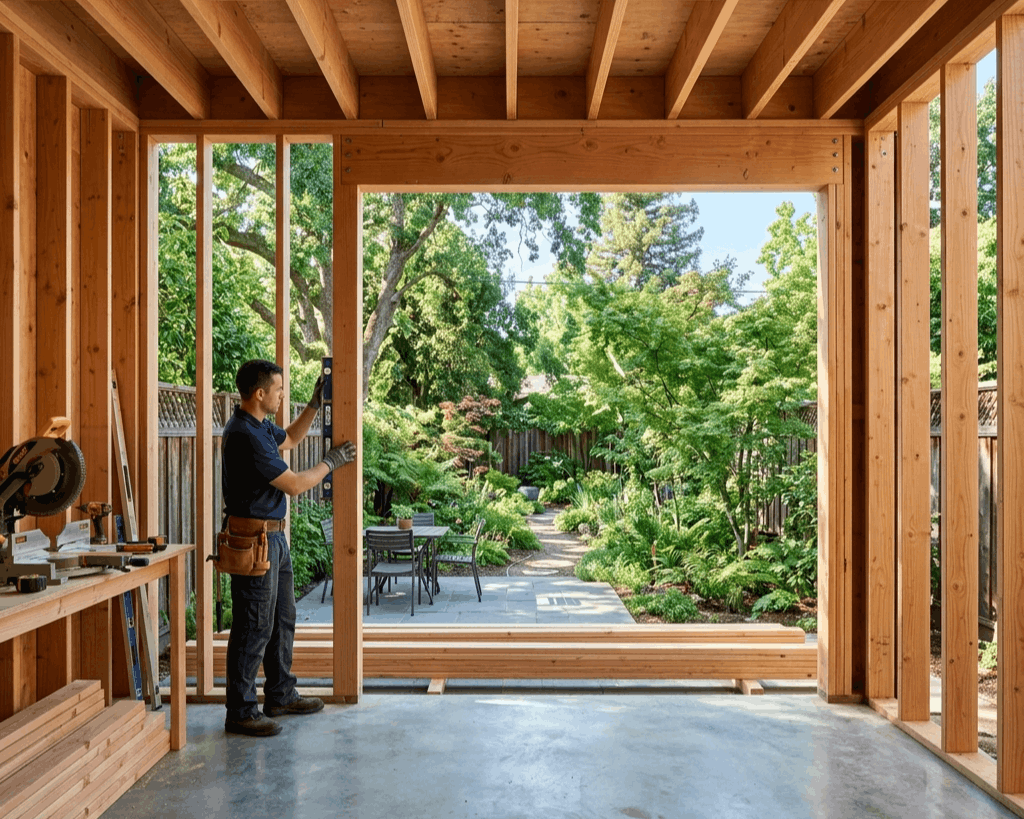
Single-Story Rear Addition Framing
The most common addition in Sacramento — done to the structural standard it deserves. A single-story rear addition is the most frequently requested addition type in Sacramento's established neighborhoods — adding a bedroom, family room, or expanded living area off the back of an existing home. The structural scope includes: new stem wall or concrete foundation, sill plate installation and anchor bolting, floor joist system (or slab if grade makes a crawl space impractical), exterior wall framing with structural sheathing, interior partition framing for the addition layout, window and door rough openings, and full roofline integration with the existing structure. Every rear addition we frame is permitted and passes the Sacramento Building Department framing inspection before insulation is installed. We commonly frame rear additions in Arden Arcade, Citrus Heights, Land Park, East Sacramento, and Elk Grove.
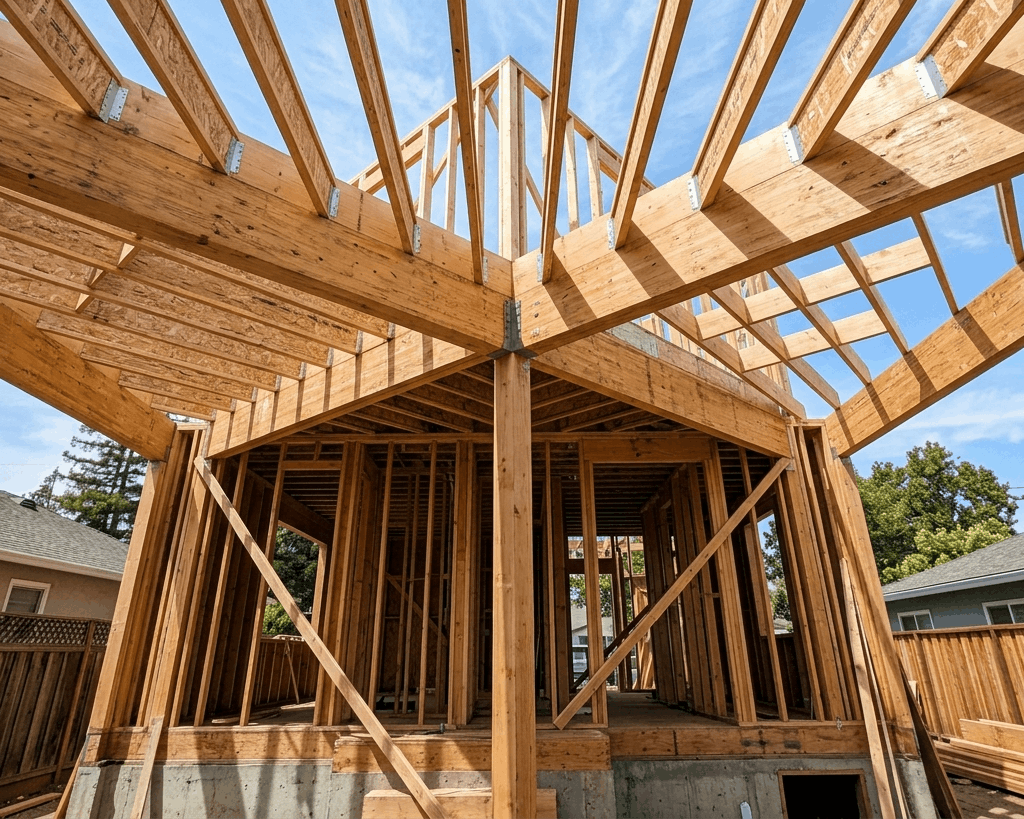
Second-Story Addition Framing
Double your square footage without touching your lot line. A second-story addition is the highest-value structural project we undertake — and also the most structurally demanding, requiring a complete engineering analysis before framing begins. We verify that the existing first-floor wall framing, beam systems, and foundation can carry the dead and live loads of the new second floor before committing to a framing scope. Where the existing first floor cannot adequately carry the added loads, we perform the required reinforcement — sistering joists, upgrading beams, or reinforcing wall studs — before framing the second-level platform. Second-story framing then proceeds: new floor joist platform, exterior wall framing, interior partitions, staircase rough opening, and full hip or gable roof framing for the new upper level. All second-story additions are engineered, permitted, and inspected.
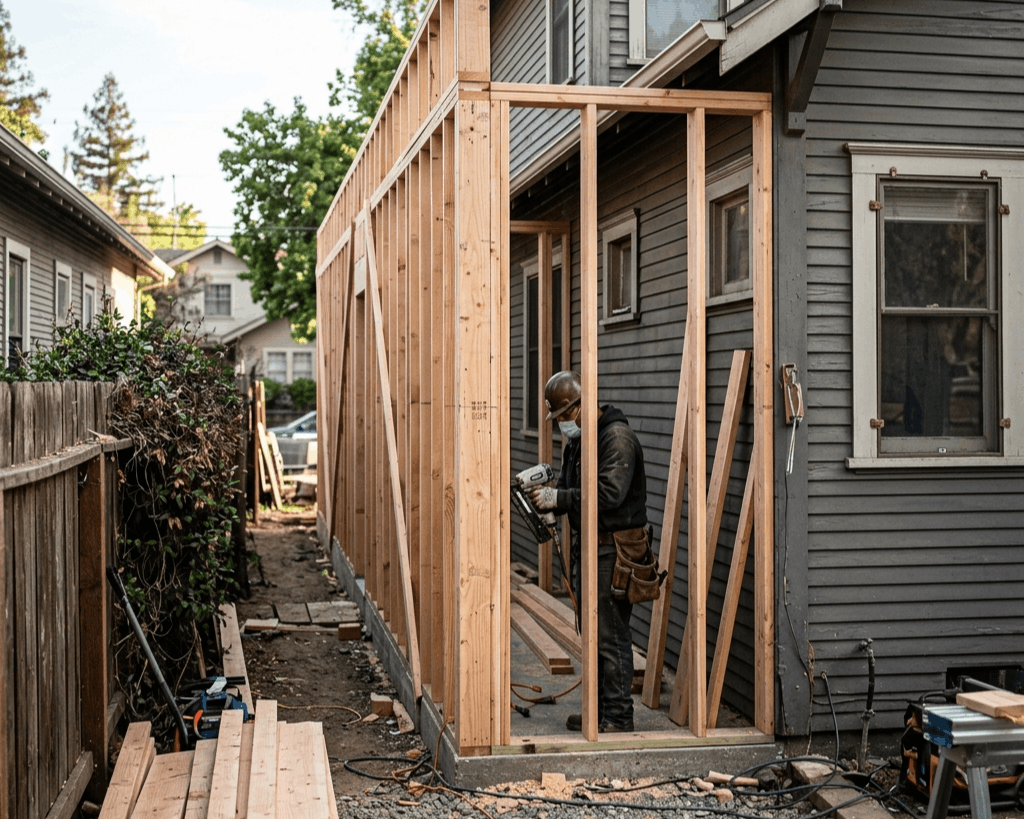
Side Addition Framing
When the backyard isn't the option — build to the side. Side additions are common in Sacramento neighborhoods with deep but narrow lots — or where a rear addition would reduce backyard space below the homeowner's threshold. Side additions require careful attention to property line setbacks (Sacramento County requires a 5-foot minimum setback for new living space in most residential zones), and often involve modifying an existing side window or door opening into the structural connection point between the old and new framing. Side addition rooflines typically integrate at the eave rather than at a ridgeline, creating a shed or low-slope addition profile — which simplifies the roofline framing but requires careful attention to drainage and gutter continuity at the junction. DC Custom has framed side additions on narrow urban lots throughout Midtown, East Sacramento, and Curtis Park.
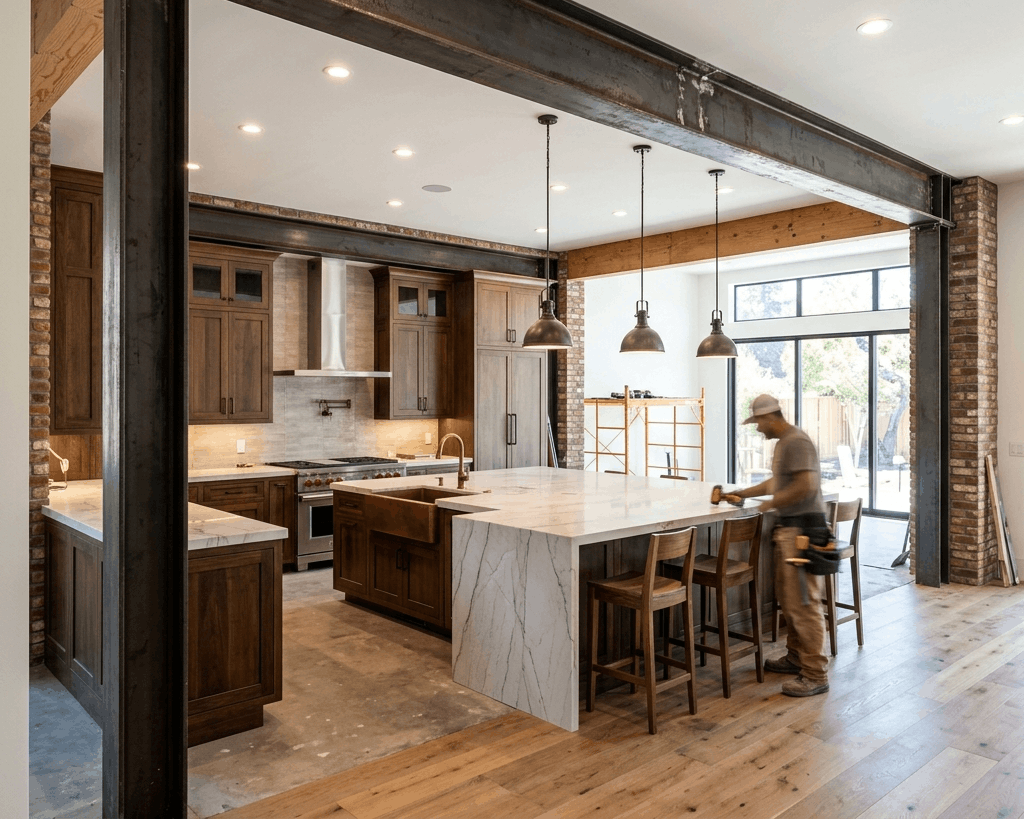
Kitchen Expansion Addition Framing
Open the kitchen, extend the footprint, or both. Kitchen expansions are Sacramento's most emotionally driven addition type — homeowners have been tolerating a small or closed kitchen for years, and when they finally do it, they want it done right. Kitchen addition framing often involves two distinct structural scopes happening simultaneously: removing an existing load-bearing wall between the kitchen and a dining or living space (with a new beam installed in its place), and extending the exterior wall and roofline to create the new square footage. DC Custom handles both scopes as a single integrated project — we don't treat the load-bearing wall removal as a separate job. We frame the full kitchen addition including new floor system (where required over a crawl space), exterior wall extension, structural roofline integration, and any interior partition framing for the revised kitchen layout.
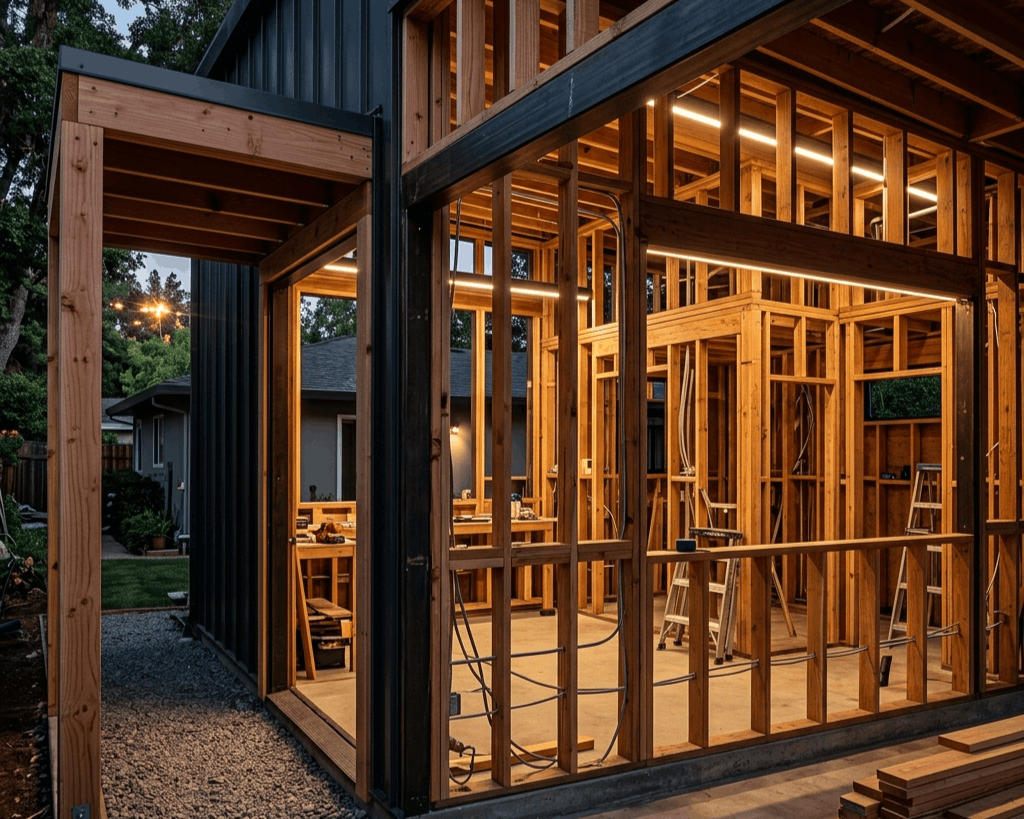
In-Law Suite / Multigenerational Addition Framing
Create private, connected living for extended family. Sacramento's multigenerational housing trend has driven significant demand for in-law suite additions — a bedroom suite with a dedicated bathroom that has both interior connection to the main house and a separate exterior entrance. In-law suite framing is structurally similar to a standard rear or side addition, but typically includes a more complex interior partition framing layout (bedroom, bathroom, kitchenette or wet bar, sitting area) and requires careful attention to egress compliance (the exterior entrance door framing and path must meet egress code). The exterior entrance also raises the question of whether the suite qualifies as an ADU — if it does, fire separation and ADU ordinance compliance requirements apply. DC Custom can advise on this during the estimate stage and frame the addition to the appropriate code standard.
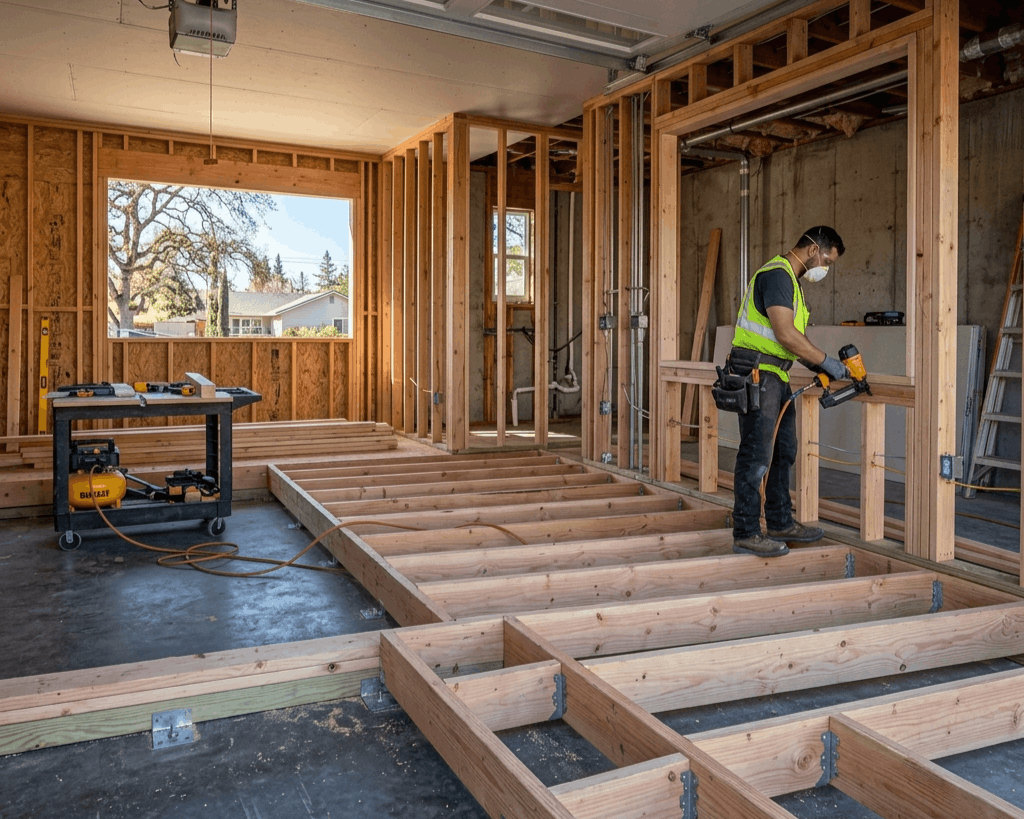
Garage-to-Living Room Addition Framing
Gain interior square footage from an attached garage. Converting an attached garage into habitable living space — a bedroom, playroom, home office, or family room — is a high-value, relatively contained project that avoids the cost of a new foundation while adding meaningful square footage. Garage-to-living framing involves: removing and reframing the garage door opening (new header, studs, and infill framing), installing a raised subfloor system over the concrete garage slab, framing interior partitions for the new room layout, and adding insulation-ready wall framing on the interior of the existing garage walls where the framing cavity is absent or inadequate. Where the garage ceiling height is insufficient for residential occupancy, we evaluate whether roof framing modifications are feasible. DC Custom has completed garage-to-living conversions on attached garages throughout Natomas, Elk Grove, and the broader Sacramento metro.
Sacramento Room Addition Framing Code Requirements
Setbacks
01
Lot coverage limits
02
Lot coverage limits
03
Foundation continuity
04
Title 24 Energy Code
05
Framing inspection
06
Our Process
How Our Sacramento Room Addition Framing Projects Work
01
Site Assessment & Scope
We visit the property, assess the existing structure's integration points (foundation, floor, walls, roofline), review your plans or preliminary design, and provide a full written estimate covering materials, labor, and timeline. For second-story and complex additions, we flag engineering requirements at this stage.
02
Permit & Drawings
Addition framing requires a building permit from the Sacramento Building Department. We coordinate with your designer or architect on the permit drawings; for second-story additions and complex roofline integrations, we coordinate stamped structural drawings with a licensed engineer.
03
Framing Execution
We frame the addition from the foundation up — floor system, exterior walls, interior partitions, roofline integration, and structural sheathing. Shear wall installation, hold-down hardware, and nailing schedules are maintained to the approved structural drawings throughout execution.
04
Framing Inspection
We schedule and pass the Sacramento Building Department framing inspection — verifying all structural connections, nailing schedules, header sizes, shear wall assemblies, and roofline integration before any insulation or close-in work begins.